

It’s 2:00 AM, and your child wakes up crying, clutching their shins or the backs of their knees. There’s no bruise, no swollen joint, and no sign of injury from their evening soccer game. By morning, they’re bouncing around the kitchen as if nothing happened.
If this scenario sounds familiar, you are not alone. Millions of parents experience the late-night heartbreak of watching their children struggle with what is commonly called “growing pains.”
At our practice, Dr. Zach loves helping young patients find real, lasting relief. While he treats patients of all ages, helping kids feel comfortable, active, and pain-free is one of the most rewarding parts of his practice. If your child is struggling with recurrent leg aches, here is what you need to know about growing pains—and how our gentle, holistic approach can help.
Causes of Growing Pains
Despite the name, medical research shows that growing pains aren’t actually caused by bones growing! Bones grow far too slowly to cause sudden, acute pain like this.
Instead, growing pains are a recognized musculoskeletal condition that affects up to 1 in 3 children (That’s a LOT!), typically between the ages of 3 and 12.
While the exact underlying cause varies, clinical research and functional movement studies point to a few key contributors:
- Muscular Overuse & Fatigue: Running, jumping, and climbing during the day can overload developing muscles, leading to nighttime fatigue and cramping.
- Biomechanical Stress: Poor foot mechanics (such as flat feet), ankle instability, or spinal alignment issues can place unnatural strain on leg muscles.
- Hypermobility: Children with unusually flexible joints often must exert extra muscular effort to stay stable during play.
- Vascular & Nervous System Irritation: Minor nerve irritation or localized poor circulation in tight muscle tissue can trigger nighttime throbbing.

Typical Symptoms of Growing Pains
Growing pains are characterized by specific symptoms that can help differentiate them from other conditions. Recognizing these symptoms is the first step in providing relief for your child.
Deep Aching or Cramping
Children often experience a deep, aching sensation or cramping in their thighs, calves, shins, or behind the knees, usually occurring in the late afternoon or evening.
Bilateral Pain
The pain typically affects both legs simultaneously, rather than just one, which is a hallmark of growing pains.
Evening or Nighttime Onset
These pains commonly manifest during the late hours, often waking children from sleep, yet they are usually absent by morning.
Intermittent Nature
Growing pains are not constant; they may occur several nights in a row and then disappear for weeks or months.
Our Specialized Services
Many parents are told that growing pains are just something kids have to “outgrow.” While they are a temporary phase of childhood, your child doesn’t have to suffer through painful nights in the meantime.
Dr. Zach takes a gentle, conservative approach tailored specifically to young, growing bodies. He evaluates how your child’s spine, hips, feet, and muscles work together to find where tension or mechanical stress is building up.
Here is a look at the comprehensive toolkit WBHC uses to help children stay comfortable and active:
Pediatric Chiropractic Care
Chiropractic care for children looks very different from care for adults. We use soft, low-force techniques—often no more pressure than you’d use to check the ripeness of a tomato—to restore proper alignment to the spine, pelvis, and lower extremities. Correcting minor misalignments reduces nerve pressure and takes biomechanical stress off tight leg muscles.
Myofascial Release Therapy
When muscles are overworked and hypertonic (extra tight), they pull on tendons and joints. Dr. Zach uses gentle myofascial techniques to release tight calf or thigh muscles, promoting healthy blood flow and quick nighttime recovery.
Customized Stretching Programs
Simple, age-appropriate stretching before bedtime can dramatically reduce nighttime awakening. Dr. Zach creates easy, fun stretching routines that parents and kids can do together at night to keep muscles elongated and relaxed.
Acupuncture and Microcurrent Therapy
For children open to it (or older kids), micro-acupuncture or non-needle electro-acupuncture can be extraordinarily effective at calming an irritated nervous system, reducing muscle spasm, and easing localized pain without medication. At Whole Body Health Care we specialize in many types of acupuncture – including help without even needing needles to begin.
Active Exercise & Mechanics Plans
If your child has flat feet, hypermobility, or weakness in their core or glutes, their leg muscles have to work twice as hard during normal play. We can design simple, exercise plans to strengthen supporting muscles and improve daily movement patterns.
Supporting Therapies (Ozone Therapy)
In select cases where localized tissue inflammation or systemic recovery support is helpful, supportive modalities like ozone therapy can help promote cellular repair, optimize circulation, and support your child’s natural healing processes. Dr. Zach is an international expert that speaks and teaches other providers on these tools.
Common Questions About Growing Pains
What are growing pains?
Growing pains are a common condition in children characterized by muscle aches and discomfort, often occurring in the legs during the evening or nighttime.
How can I tell if my child has growing pains?
Growing pains typically involve bilateral leg pain, often in the thighs, calves, or behind the knees, and usually resolve by morning.
Are growing pains a sign of a serious condition?
Growing pains are generally harmless and not linked to any serious medical conditions, but persistent or severe pain should be evaluated by a healthcare professional.
How can I help my child during an episode of growing pains?
Gentle massage, warm compresses, and stretching exercises can help alleviate discomfort during episodes of growing pains.
When should I consult a doctor about my child's leg pain?
If the pain is severe, persistent, or accompanied by other symptoms like swelling or redness, it’s important to seek medical advice.
Can growing pains affect a child's sleep?
Yes, growing pains can disrupt sleep, but with proper care and management, children can find relief and rest more comfortably.
What treatments are available for growing pains?
Treatments may include chiropractic care, gentle stretching routines, and supportive therapies to ease muscle tension and improve alignment.
Do growing pains indicate actual growth?
While named ‘growing pains,’ they are not directly linked to growth spurts but rather to muscle fatigue and overuse.
Can diet or lifestyle changes help with growing pains?
A balanced diet and regular physical activity can support overall health, but specific changes should be discussed with a healthcare provider.
Helping Your Child Sleep Soundly Again
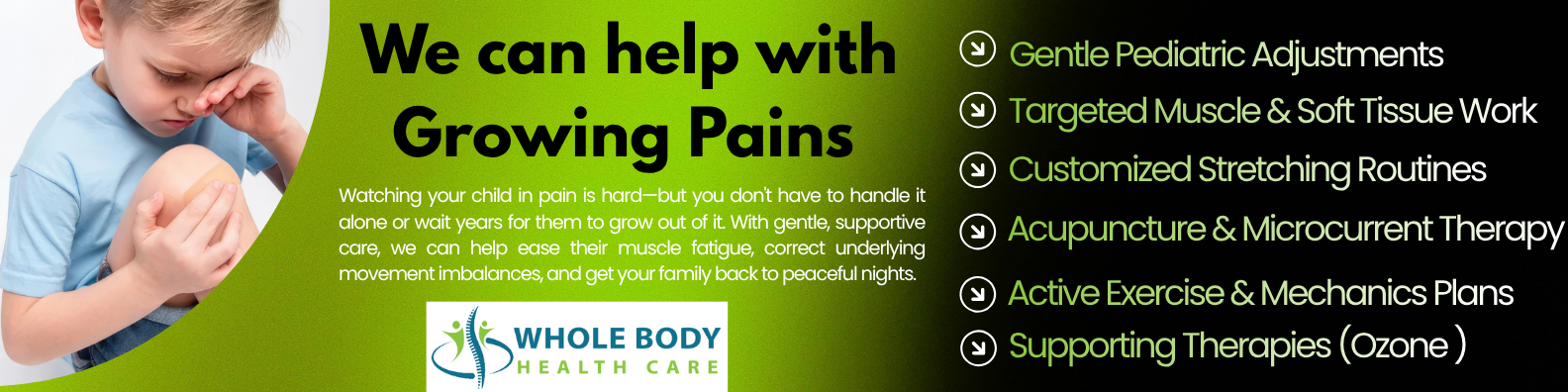
Watching your child in pain is hard—but you don’t have to handle it alone or wait years for them to grow out of it. With gentle, supportive care, we can help ease their muscle fatigue, correct underlying movement imbalances, and get your family back to peaceful nights.
Give our office a call today or schedule a consultation with us at Whole Body Health Care. We’d love to welcome your family into our office and help your child play, run, and sleep without pain!