
Discover Relief for Your Foot Pain
Plantar Fasciitis
That sharp, stabbing pain in your heel when you take your very first steps in the morning isn’t just a minor annoyance—it’s the classic hallmark of plantar fasciitis.
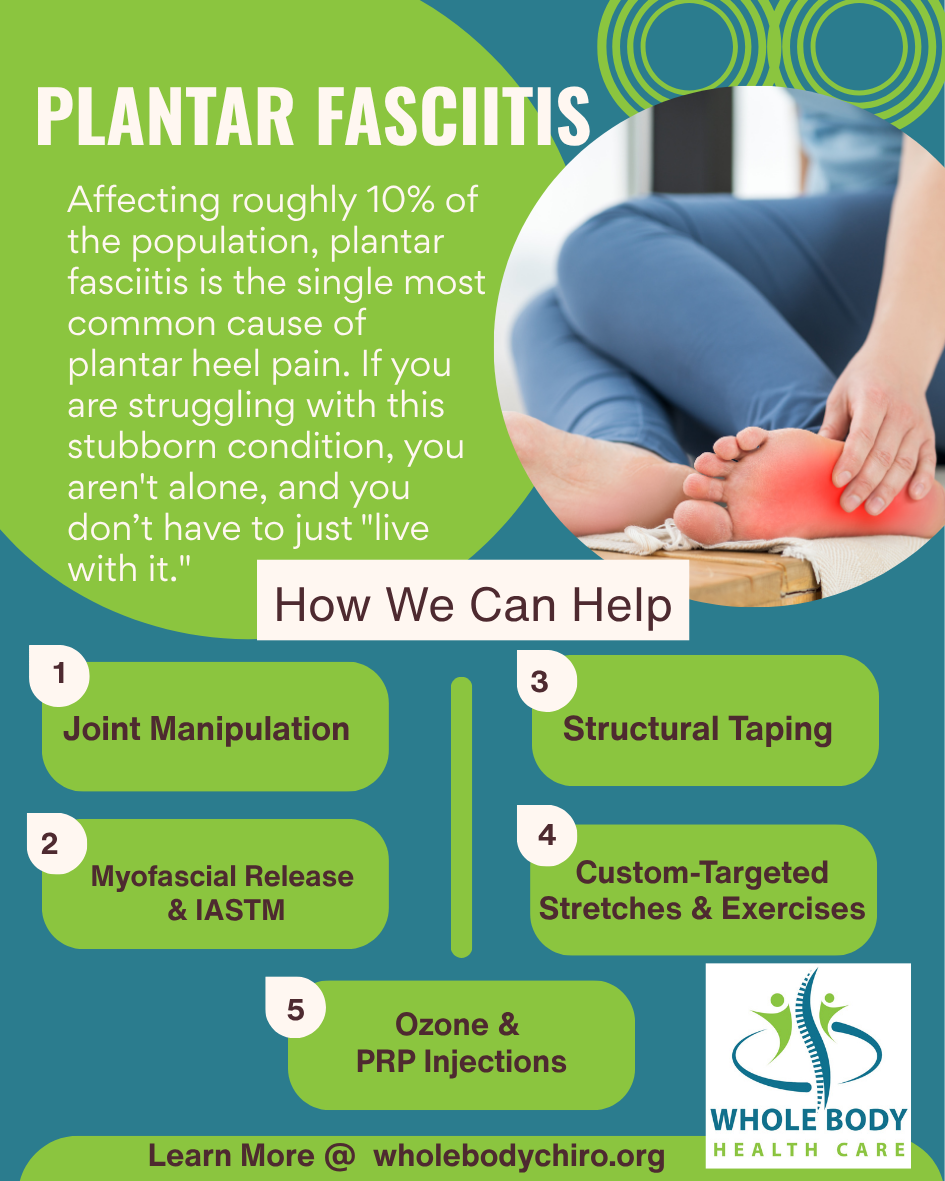
Affecting roughly 10% of the population, plantar fasciitis is the single most common cause of plantar heel pain. If you are struggling with this stubborn condition, you aren’t alone, and you don’t have to just “live with it.” Let’s dive into what is actually happening in your foot and how our comprehensive care plan can get you back on your feet comfortably.
Understanding Plantar Fasciitis
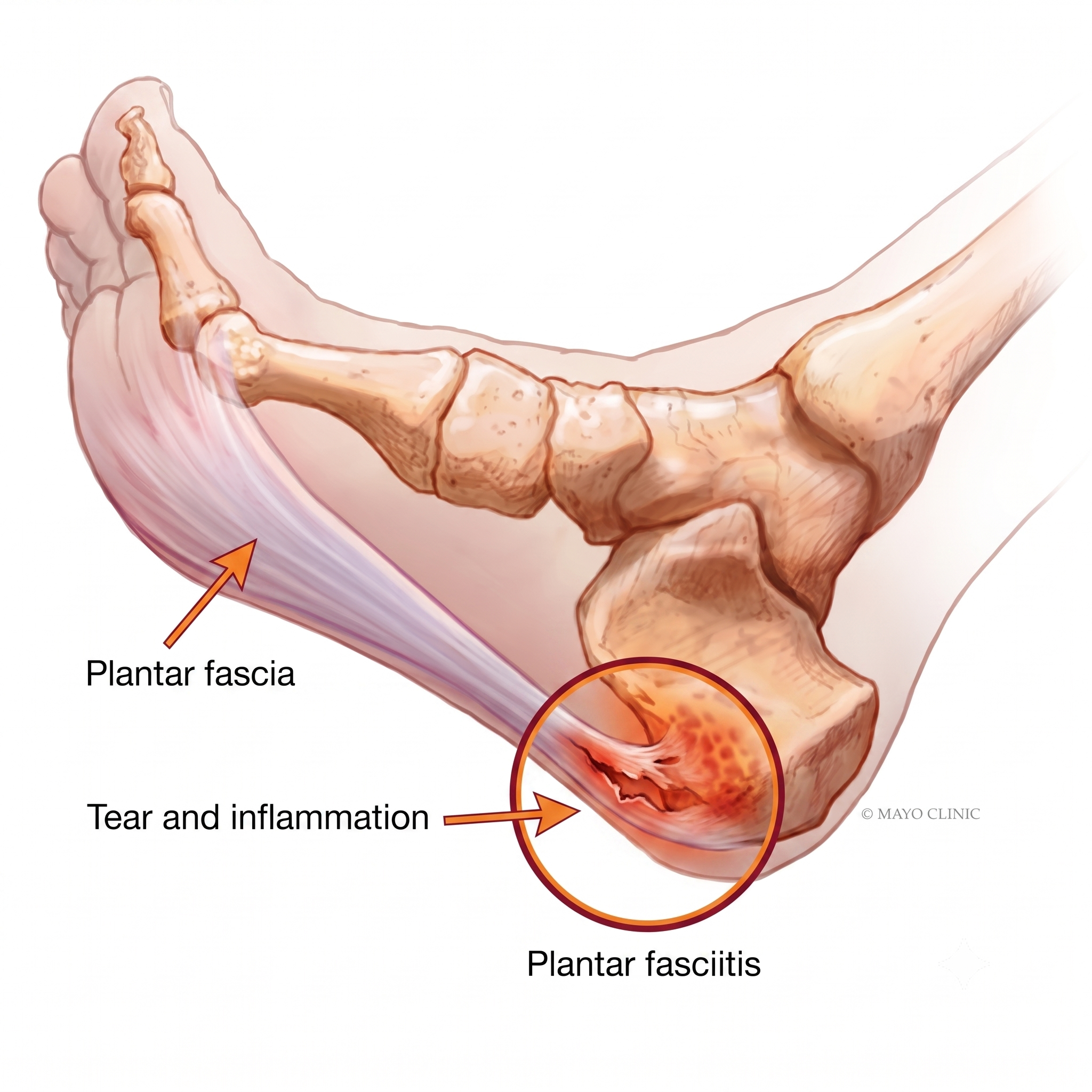
The plantar fascia is a thick, fibrous band of tissue running along the bottom of your foot, connecting your heel bone to your toes. It acts as a natural shock absorber and supports the arch of your foot. When you lift your heel to step forward, this band tightens to create a firm lever that propels you ahead.
Contrary to what the “-itis” suffix implies, recent medical literature shows that chronic plantar fasciitis is usually not an inflammatory problem. Instead, it is typically a degenerative process caused by repetitive, chronic overload. So we could call it plantar fasciopathy.
Causes and Risk Factors of Plantar Fasciitis
When the micro-tears from daily strain exceed your body’s ability to repair them, the tissue begins to break down in a disorganized way. Several factors increase your risk:

Foot Biomechanics
Both flat feet (pes planus) and high arches (pes cavus) put abnormal tensile strain on the fascia.
Muscle Tightness
Hypertonicity (tightness) in your calves (gastrocnemius/soleus) or hamstrings directly limits ankle movement, forcing the plantar fascia to overcompensate.
Overuse & Activity
Occupations requiring prolonged standing (nurses, teachers, construction workers) and a sudden increase in running distance or changing running surfaces.
Improper Footwear
Shoes lacking adequate arch support, or those with paper-thin soles, force the fascia to absorb up to seven times your body weight alone
How We Can Help: Our 5-Step Targeted Treatment Approach
Because plantar fasciitis is a multi-faceted condition, relying on rest alone rarely solves the root issue. We utilize a multimodal treatment strategy combining cutting-edge regenerative techniques with targeted hands-on structural therapy.
1. Joint Manipulation
Restoring proper movement to the foot and ankle complex is critical. We use precise ankle and foot joint manipulations to improve restricted ranges of motion, specifically targeting limited ankle dorsiflexion. By ensuring the joints of your foot move smoothly, we instantly reduce the mechanical bottleneck that forces the plantar fascia to overstretch.
2. Myofascial Release & IASTM
Tightness and scar tissue in the calf and the bottom of the foot lock the fascia in a high-stress state. Using specialized hands-on myofascial release and Instrument-Assisted Soft Tissue Mobilization (IASTM), we break down dense, fibrotic tissue and adhesions. This stimulates specialized cells called fibroblasts to lay down healthy, organized tissue, effectively kickstarting your body’s natural healing process.
3. Structural Taping
To give your foot immediate relief and structural support while you heal, we can implement clinical taping techniques. Applying advanced elastic or mechanical tape limits excessive pronation (the rolling inward of the foot) and temporarily offloads the high-tension strain on the medial heel. It essentially acts as a temporary, external arch support.
4. Custom-Targeted Stretches & Exercises
We don’t just treat you in the clinic; we equip you with the tools to stay healthy. We will guide you through evidence-based, tissue-specific protocols:
5. Ozone & PRP Injections
For stubborn, recalcitrant cases that need an extra biological boost, we offer ozone and platelet-rich plasma injections. This minimally invasive regenerative therapy introduces medical-grade ozone or your bodie’s own healing factors from your blood directly to the damaged tissue area. Ozone and PRP therapy helps safely improve localized blood flow, optimize oxygen utilization, and accelerate cellular repair in a tissue that notoriously suffers from poor blood supply. They are both good on their own but really work well combined together.
Dr. Manwaring is a board certified orthopedic chiropractor and leads the profession’s subspecialty for injection therapies by training and certifying other doctors in these treatments.
Ready to Walk Without Pain?
Plantar fasciitis can linger for months or even years if left unmanaged. If you are tired of limping through your mornings, let us help you build a personalized strategy that resolves the pain and fixes your underlying biomechanics. Contact us today to schedule your evaluation!
Take the First Step to Pain-Free Living
References & Trusted Sources
- Plantar Fasciopathy Clinical Review. National Institutes of Health (PMC): PMC12328946
- Plantar Fasciitis: Symptoms, Causes & Treatment. Cleveland Clinic: Cleveland Clinic Plantar Fasciitis Guide
- Plantar Fasciitis Symptoms and Causes. Mayo Clinic: Mayo Clinic Plantar Fasciitis Conditions