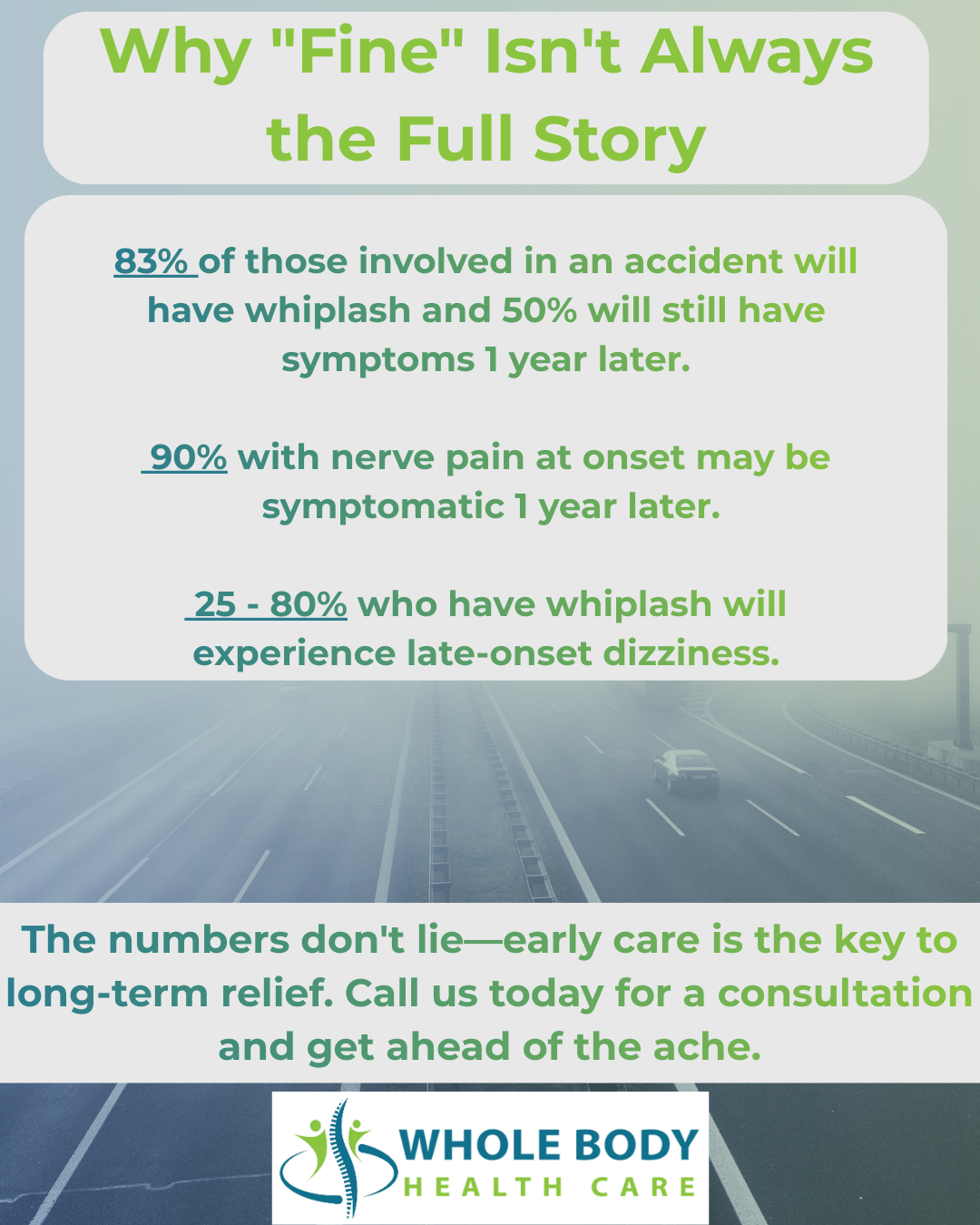
At Whole Body Health Care, we specialize in helping patients navigate the physical and logistical aftermath of auto accidents. We know that in the moments following a collision, your mind is on your vehicle and your insurance—not necessarily your spine. However, we often see patients who feel “fine” initially, only to have debilitating pain set in days or weeks later once the adrenaline wears off.
Because we understand the complexities of these cases, we have built strong, trusted relationships with local personal injury lawyers to ensure your recovery is supported both medically and legally. The best way to prevent a minor “fender bender” from becoming a lifelong injury is to be examined immediately. Whether you have visible symptoms or not, scheduling your evaluation right after the accident is the most important step you can take for your long-term health.
What is Whiplash?
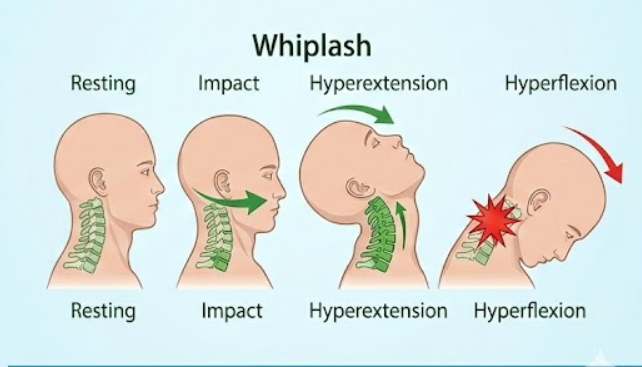
Your neck is made up of seven bones stacked on top of each other with a shock-absorbing disc between each level. Your neck is relatively flexible, so it relies on your muscles and ligaments for support. “Whiplash” describes what happens when these tissues are stretched too hard or too far, much like a rope that frays when it is stretched beyond its capacity.
The Surprising Science of Collisions
Auto accidents are the leading cause of whiplash. Up to 83% of people involved in an accident will suffer a whiplash injury. The extent of your injury can be predicted by several factors: patients struck from behind in a rear-end collision generally suffer the most injury, and being struck by a larger or heavier vehicle also increases your risk.
Crucially, your vehicle does not need to be visibly damaged in order for you to be injured. In fact, the amount of damage to your vehicle has little relationship to your injuries. Most modern cars have shock-absorbent bumpers that minimize damage to the vehicle but do not necessarily protect the occupants—even in low-speed collisions of less than 5 MPH.
Risk Factors and Pre-existing Conditions
Other factors that increase your chance of injury include improperly positioned head restraints, wet or icy roads, having your head rotated or extended at the time of impact, and being unaware of the impending collision. As we age, our tissues become less elastic, and our risk of injury increases. Additionally, females and those with pre-existing arthritis are more likely to develop complaints.
Common Symptoms and Warning Signs
Symptoms may begin immediately or have a delayed onset. Ongoing complaints often include:
-
Dull neck pain that becomes sharper when you move your head.
-
Pain centered in the back of the neck that spreads to the shoulders or shoulder blades.
-
Tension headaches, dizziness, or TMJ problems.
-
Low back pain resulting from the whiplash impact.
When to Seek Immediate Medical Attention
While rest may temporarily relieve symptoms, it often leads to stiffness. Be sure to tell your doctor if you have signs of a more serious injury, including:
-
Severe or “different” headaches or loss of consciousness.
-
Confusion, “fogginess,” or difficulty concentrating.
-
Slurred speech, difficulty swallowing, or changes in vision.
-
Numbness, tingling, or weakness in your arms or face.
-
Decreased bowel or bladder control.
The Risk of Scar Tissue and Concussions
Sprain/strain injuries cause your healthy elastic tissue to be replaced with less elastic “scar tissue,” which can lead to ongoing pain and arthritis. Over half of those injured will still have neck pain a year after their accident. New evidence also suggests that whiplash results in concussive-type injuries, which are mild traumatic brain injuries. Seeking early and appropriate treatment is critical for you and any passengers who were in the vehicle.
The Path to Recovery: Staying Active
Depending on severity, you may need to limit heavy activity, but significantly limiting daily living can actually delay your recovery. Rest can lead to increased stiffness; you should try to “act as usual” and resume normal activities as soon as possible. Incorporating professional care with corrective exercises will assist your recovery greatly.
Daily Care Tips
-
Activity: Avoid heavy lifting and take frequent breaks from prolonged or overhead activity.
-
Support: Avoid heavy headgear (like helmets) and cervical collars unless directed by a doctor.
-
Temperature Therapy: Apply ice for 10-15 minutes each hour for the first couple of days; heat may be helpful thereafter.
Don’t Leave Your Recovery to Chance
A car accident is overwhelming, but your physical recovery doesn’t have to be. Whether you are feeling fine today or are already noticing stiffness, the best time to get examined is right now.
At Whole Body Health Care, we do more than just treat the pain—we help you navigate the entire process. From providing the specific documentation your insurance requires to working seamlessly with your legal counsel, we ensure your health and your claim are both protected.